October brings a mix of planetary highlights, meteor showers, and a few beautiful conjunctions worth staying up for. Here’s what’s happening in the night sky this month.
October’s celestial events and conjunctions
5–8 October: Moon, Mars and Jupiter Conjunctions
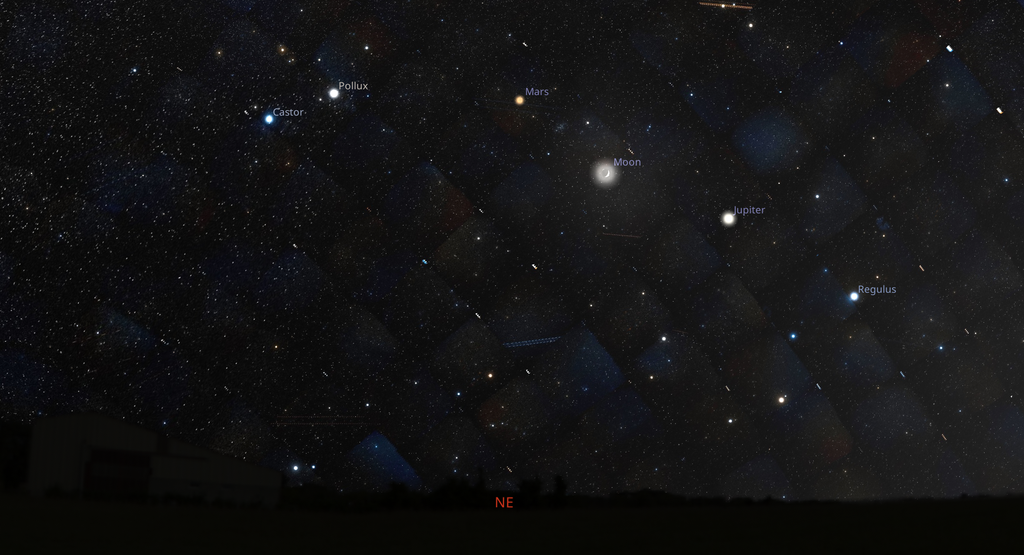
Over 4 mornings, the waning crescent Moon sweeps past Mars and Jupiter. On the 5th it sits six degrees west of Mars, on the 6th it moves between the two planets, and on the 7th it appears six degrees east of Jupiter. Not only is this a conjunction between two planets, it joins three bright stars, Pollux and Castor as well as Regulus, for an extra bit of extra WOW factor.
11 and 12 October: Mars passes through the Beehive Cluster
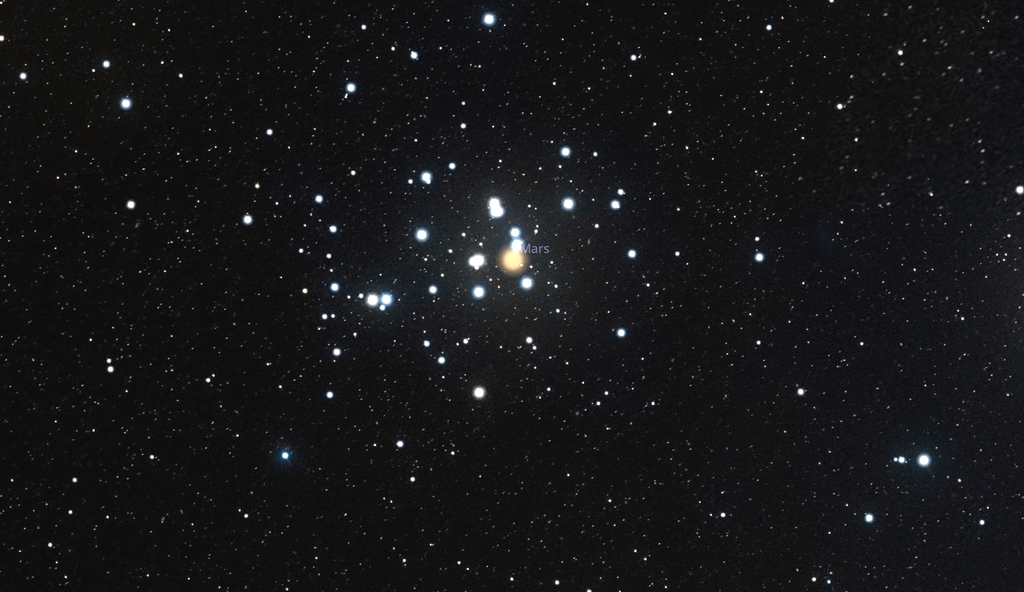
On the mornings of 11 and 12 October, Mars moves through the Beehive Cluster (M44) in Cancer, creating a tight, binocular‑friendly pairing in the early sky. Mars rises at around 2:00 AM AEST on both mornings. Look towards the western horizon.
10 October:🌑 New Moon
This is the point in the lunar cycle when the Moon sits between Earth and the Sun, so its sunlit side faces away from us and the Moon becomes essentially invisible in the sky. With no moonlight at all, the sky is at its darkest, making this the best time of the month for deep‑sky observing and astrophotography. Galaxies, nebulae and faint clusters stand out more clearly, and long‑exposure imaging is much easier without the Moon washing everything out.
12 October: Mercury, Venus and Moon Conjunction
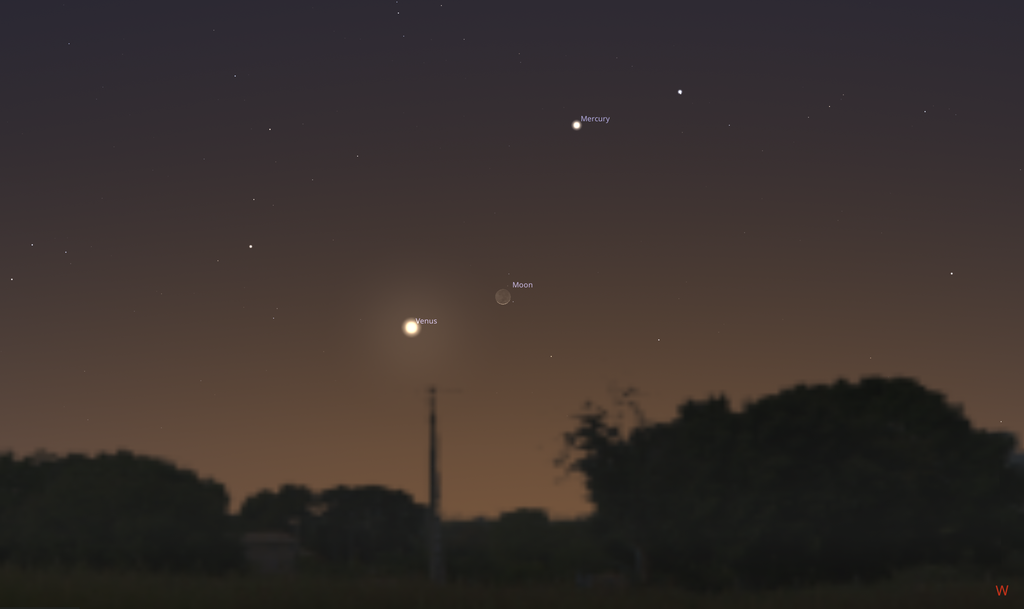
Look west on 12 October shortly after sunset, around 6:30 PM AEST, to catch a beautiful conjunction between two evening planets and an ultra‑thin crescent Moon. Venus and the Moon will slip below the western horizon at about 7:00 PM, followed by Mercury roughly 30 minutes later, making this a short but striking twilight event.
24 October: Saturn Conjunction
The waxing gibbous Moon passes 7 degrees from Saturn. This pairing is visible most of the night from Moonrise to Moonset. Best seen with the naked eye.
26 October: 🌕 Full Moon (Hunter’s Moon)
The moon will rise big and bright at 6:20 PM AEST above the eastern horizon. This Full Moon is known as the Hunter’s Moon, named because its bright light traditionally helped hunters track game after corn fields were cleared following September’s Harvest Moon.
31 October: Mars and Jupiter Close Approach
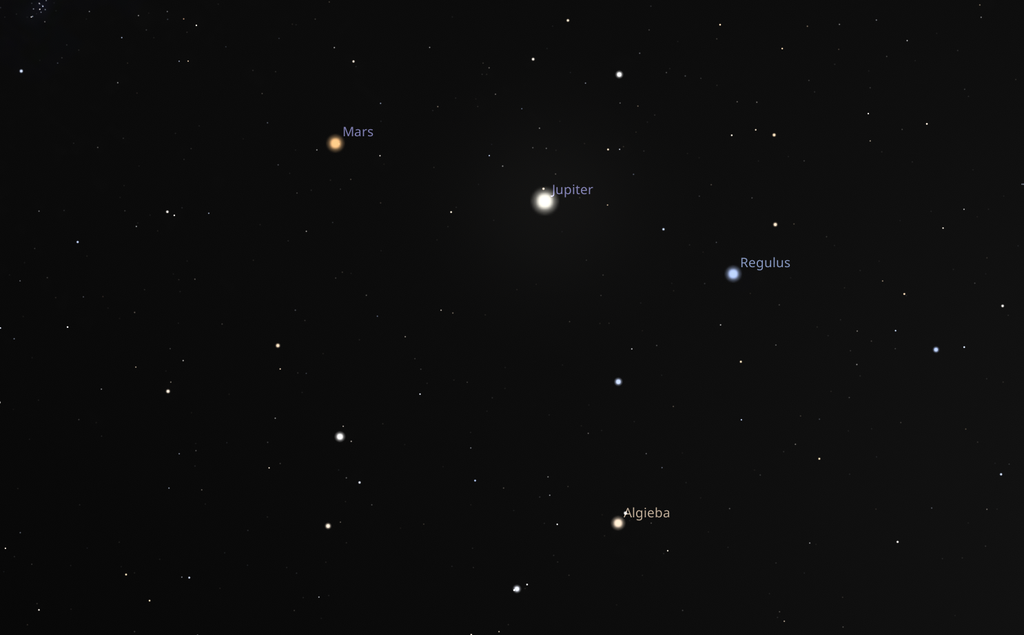
Mars meets Jupiter in a close pairing only six degrees apart. On that morning, Mars rises at 2:30 AM, followed by Jupiter sixteen minutes later. No fancy equipment needed to observe this one.
Lunar phases
🌗 4 October: Last Quarter
🌑11 October: New Moon
🌓 19 October: First Quarter
🌕 26 October: Full Moon
Learn more about the moon and lunar phases.
Lunar occultations
Lunar occultation of Mars
On Monday 5 October the Moon will pass in front of the planet Mars. This occultation is only visible to people living in northern Canada. The occulation will start at 05:07 UTC. For those living outside of this region, a conjunction between the pair will be more widely visible. For exact times, visit Lunar occultation of Mars.
Lunar occultation of Jupiter
On Tuesday 6 October the Moon will pass in front of the planet Jupiter. This occultation is only visible to people living in parts of Africa and America. The occulation will start at 08:14 UTC. For those living outside of this region, a conjunction between the pair will be more widely visible. For exact times, visit Lunar occultation of Jupiter.
Lunar occultation of Regulas
On Wednesday 7 October the Moon will pass in front of the star Regulus. This occultation is only visible to people living in parts of Africa. The occulation will start at 01:14 UTC. For exact times, visit Lunar occultation of Regulus.
Lunar occultation of Antares
On Thursday 15 October the Moon will pass in front of the star Antares. This occultation is only visible to people living in parts of eastern Uruguay, southern Brazil, South Georgia and the South Sandwich Islands and Saint Helena. The occulation will start at 18:54 UTC. For exact times, visit Lunar occultation of Antares.
Lunar occultation of Sigma Sagittarii
On Saturday 17 October the Moon will pass in front of the star Sigma Sagittarii. This occultation is only visible to people living in parts of Madagascar, southern Sri Lanka, Mauritius and Reunion. The occulation will start at 12:33 UTC. For exact times, visit Lunar occultation of Sigma Sagittarii.
Lunar occultation of Beta Tauri
On Thursday 29 October the Moon will pass in front of the star Beta Tauri. This occultation is only visible to people living in parts of eastern Australia, New Zealand, Fiji and New Caledonia, Cook Islands, Vanuatu, Samoa, Tonga and other nearby islands. The occulation will start at 12:53 UTC or 23:53 AEDT. For exact times, visit Lunar occultation of Beta Tauri.
Planetary events
Mercury
Mercury reaches its best evening position of the year this month, setting two hours after the Sun. On 12 October it reaches Greatest Eastern Elongation, its furtherest point away from the Sun from our view point. It spends the month in Libra, moving back toward inferior conjunction, and by the end of October it sets only forty minutes after the Sun, becoming difficult to spot in the bright twilight. Inferior conjunction is when an inner planet moves directly between the Earth and the Sun. From our point of view, the planet is lined up with the Sun, so it becomes impossible to see in the glare.
Venus
Venus ends its reign as the “Evening Star.” It’s visible in the western sky only for the first few days of October before heading toward inferior conjunction on 24 October. By month’s end, it rises just twenty minutes before the Sun, hidden in morning twilight.
Mars and Jupiter
Early in the month, Mars and Jupiter share the same region of sky in neighbouring constellations. Mars begins in Cancer, by 31 October, it moves into Leo, joining Jupiter just six degrees apart. On that morning, Mars rises at 2:30 AM, followed by Jupiter sixteen minutes later.
Saturn – 4 October, Opposition
Saturn spends October in Cetus. It rises around 6:10 PM early in the month and an hour earlier by month’s end. At opposition on 4 October, Saturn is at its closest approach to Earth and fully illuminated by the Sun, making it visible all night long. This is the best time to view and photograph Saturn and its moons. Even a small telescope will show the rings, while a medium or larger instrument reveals multiple moons. The rings are tilted 7.5 degrees to our line of sight, thin, but still striking.
Meteor showers
7 October: Draconids Meteor Shower
The Draconids are a small, gentle shower, producing around ten meteors per hour, but they’re unusual in that they peak in the early evening rather than after midnight. With only a thin waning crescent Moon in the sky, conditions will be reasonably dark. No equipment is needed, just find a comfortable spot away from bright lights, look up, and give your eyes time to adjust. Although the meteors radiate from Draco, they can appear anywhere overhead.
21–22 October: Orionids Meteor Shower
The Orionids are faster and brighter, with up to twenty meteors per hour at their peak. These meteors come from debris shed by Halley’s Comet, and they often leave brief glowing trails. The waxing gibbous Moon will interfere early in the night, but once it sets the sky will darken significantly. Moonset on 22 October for SE QLD occurs around 1:30 AM. The best viewing is from midnight until dawn, ideally from a location away from city light pollution. The meteors originate from the direction of Orion, but they can streak across the entire sky.
Southern hemisphere comets
Evening
- 10P/Tempel 2 — mag 8, alt 55°
- 161P/Hartley–IRAS — mag 10, alt 29°
- 88P/Howell — mag 12, alt 26°
- C/2024 T5 (ATLAS) — mag 12, alt 16°
Midnight
- 10P/Tempel 2 — mag 8, alt 90°
- 220P/McNaught — mag 9, alt 29°
- 161P/Hartley–IRAS — mag 10, alt 70°
- C/2024 T5 (ATLAS) — mag 12, alt 64°
- 88P/Howell — mag 12, alt 40°
Morning
- 10P/Tempel 2 — mag 8, alt 27°
- 220P/McNaught — mag 9, alt 49°
- 169P/NEAT — mag 10, alt 8°
For more information, refer to Visual comets in the Future (Southern hemisphere).
Northern hemisphere comets
Evening
- 10P/Tempel 2 — mag 8, alt 20°
- 161P/Hartley–IRAS — mag 10, alt 10°
- 88P/Howell — mag 12, alt 12°
Midnight
- 10P/Tempel 2 — mag 8, alt 60°
- 161P/Hartley–IRAS — mag 10, alt 40°
- 88P/Howell — mag 12, alt 30°
Morning
- 10P/Tempel 2 — mag 8, alt 45°
- 169P/NEAT — mag 10, alt 15°
View comets for the Northern Hemisphere.
Show your support
If you enjoy guides like this and want to help me keep creating them, you can show your support by donating. Every contribution genuinely helps me spend more time under the night sky and bring these resources to life. You can also follow me on Instagram and Facebook, where I post reminders closer to each event so you never miss a moment happening overhead.