The Moon has been humanity’s favourite cosmic companion for as long as we’ve been looking up. It waxes, it wanes, it plays hide‑and‑seek with the Sun, and occasionally throws a full‑Moon party bright enough to keep ancient astronomers awake all night. But those changing shapes aren’t just pretty. They’re a precise celestial clock that guided agriculture, religion, navigation, and storytelling for thousands of years. Let’s dive into the Moon’s phases, how they work, who first recorded them, and what different cultures believed those shifting shapes meant.
What Causes the Moon’s Phases?
The Moon does not actually change shape. We simply see different portions of its sunlit half as it orbits Earth.
One full orbit takes 29.53 days, known as a synodic month. As the Moon moves around us, sunlight hits it from different angles, and we see that changing illumination from Earth.
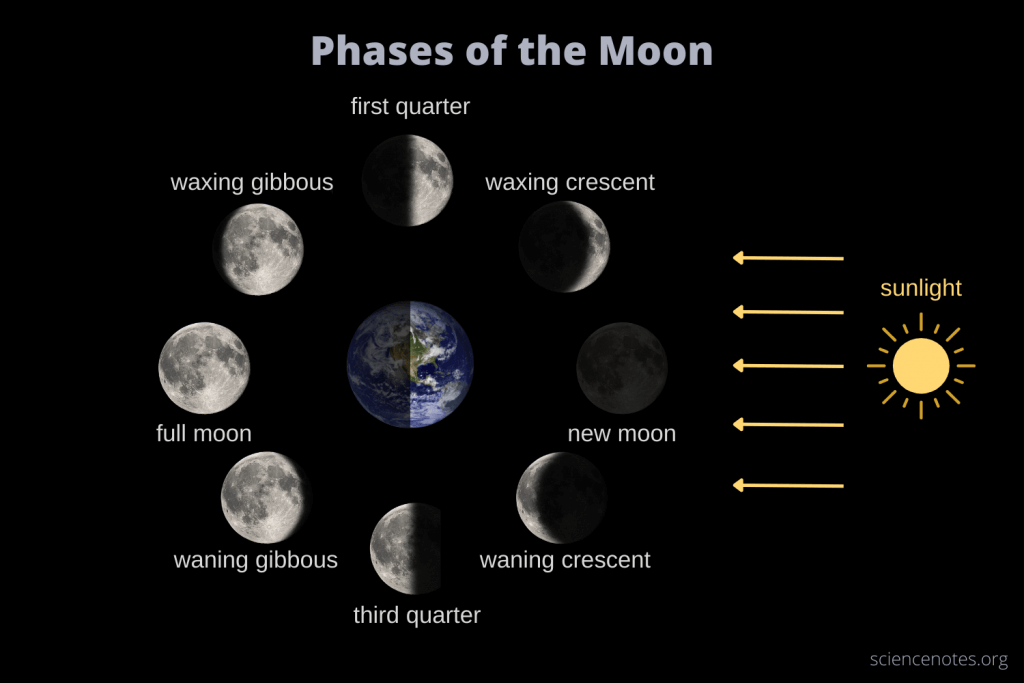
The 8 primary phases are:
- New Moon
- Waxing Crescent
- First Quarter
- Waxing Gibbous
- Full Moon
- Waning Gibbous
- Last Quarter
- Waning Crescent
If you ever feel like the Moon is being dramatic, you are not wrong. It cycles through eight moods every month.
Who First Recorded the Moon’s Phases
Humans have been tracking lunar cycles long before writing existed.
30,000 BCE Paleolithic lunar markings
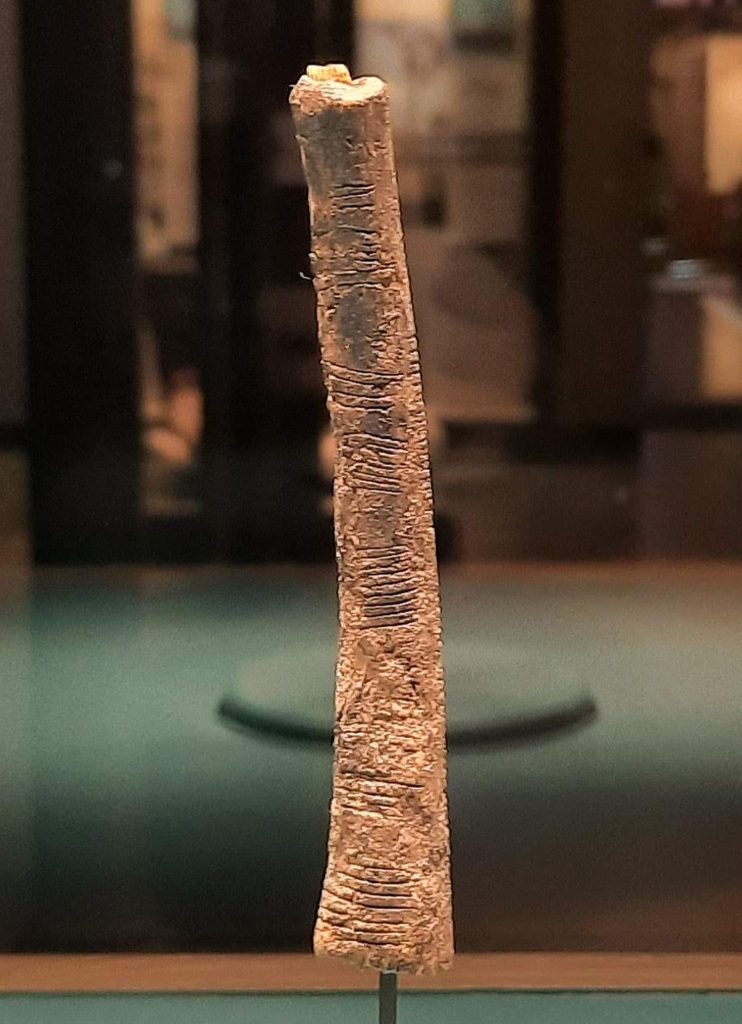
Archaeologists have found bone and stone carvings with repeating notches believed to represent lunar cycles. One famous example is the Ishango Bone, discovered near the Nile. It may record Moon phases.
Credit: Joeykentin CC BY-SA 4.0
3000 to 2000 BCE Ancient Sumerians
The Sumerians were among the first to formally document lunar months. Their calendar was entirely lunar, and priests tracked the Moon’s phases to schedule religious festivals.
2000 BCE Babylonian astronomers
Babylonians recorded lunar months, eclipse predictions and the relationship between Moon phases and tides. Their clay tablets show detailed observations of the Moon’s motion, some accurate to within minutes.
1500 to 500 BCE Ancient Chinese astronomers
Chinese astronomers documented the Moon’s phases in meticulous detail. The Zhou Dynasty used lunar cycles to regulate agriculture and state rituals.
5th century BCE Greek philosophers
Anaxagoras was the first to correctly explain that the Moon shines by reflected sunlight. Later, Aristotle described the phases as a result of the Moon’s spherical shape.
1609 Galileo’s telescope
Galileo sketched the Moon’s phases through his telescope, revealing mountains, craters and shadows. His drawings proved the Moon was not a perfect celestial sphere, which was a controversial idea at the time.
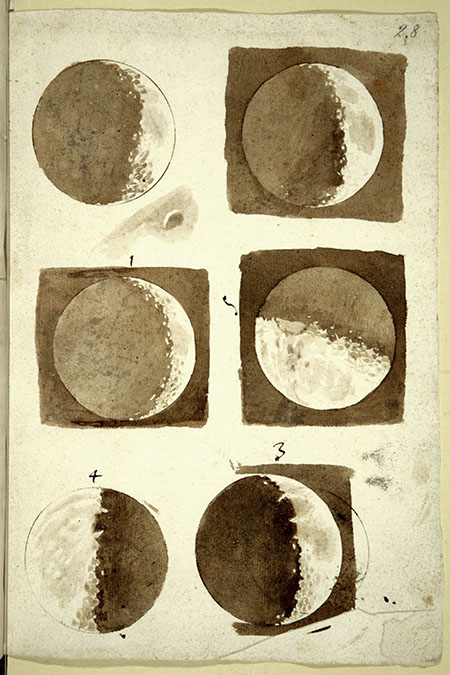
Drawings of the Moon, November-December 1609
Florence, Biblioteca Nazionale Centrale, Ms. Gal. 48, f. 28r
What Ancient Cultures Thought the Phases Meant
Before astronomy became science, the Moon’s changing shape was interpreted through myth, symbolism and storytelling.
Ancient Egyptians
The waxing and waning Moon represented the god Khonsu, a timekeeper. Its monthly cycle symbolised rebirth and renewal.
Greeks and Romans
The Moon was personified as Selene in Greece and Luna in Rome. The phases were seen as her changing emotional states. A cosmic mood board.
Indigenous Australians
Many Aboriginal cultures used the Moon’s phases to track seasonal changes, tides and food availability. Some stories describe the Moon as a man who grows thin and then fat again.
Māori of Aotearoa
The Moon, Marama, governed planting, fishing and hunting. Each phase had a name and specific meaning. Some days were excellent for planting, others unlucky.
Norse mythology
The Moon was chased across the sky by a wolf named Hati. Its phases represented the wolf drawing closer or falling behind.
Aztecs
The Moon goddess Coyolxauhqui was associated with cycles of death and rebirth. The phases symbolised her dismemberment and reassembly.
Across cultures, the Moon was not just a rock. It was a calendar, a deity, a storyteller and a guide.
The Full Moon History’s Favourite Phase
The full Moon has always been the star of the show. Pun intended.
Historically, full Moons were used to:
- schedule harvests
- predict tides
- mark religious festivals
- guide nighttime travel
- track seasons
Many cultures named each full Moon:
- Wolf Moon in January
- Strawberry Moon in June
- Hunter’s Moon in October
These names helped communities remember seasonal patterns long before meteorology existed.
Why the Moon Looks Different Depending on Where You Live
A fun fact. The Moon’s orientation changes depending on your location.
- In the Northern Hemisphere, the crescent often appears like a C
- In Australia, it often looks like a U or a backwards C
- Near the equator, the crescent can look like a smile
This is geometry. You are viewing the Moon from a different angle on Earth’s curved surface.
Important Dates in Lunar History
- 1609 Galileo sketches the Moon’s phases
- 1838 First photographic record of the Moon
- 1969 Apollo 11 lands on the Moon
- 1994 Clementine spacecraft maps the lunar surface
- 2022 Artemis I begins NASA’s return to the Moon program
Every generation adds a new chapter to our lunar story.
Why Understanding the Phases Matters Today
Even in the age of smartphones and satellites, the Moon’s phases still matter.
- Astrophotographers use them to plan imaging sessions
- Astronomers track lunar illumination for observations
- Fishermen use them to predict tides
- Gardeners follow lunar planting calendars
- Cultural festivals still rely on lunar months
The Moon is ancient, but its influence is ongoing and its phases are one of the oldest rhythms humans have ever known. They guided our ancestors, inspired myths, shaped calendars and still help us plan our nights under the stars.
Every time the Moon changes shape, it is not just a phase. It is a reminder that we are part of a cosmic dance that has been spinning for billions of years.
If you ever need a reason to look up, the Moon will happily give you eight of them every month.
Leave a Reply