Do you fear those awkward silences at star parties and observing nights? These ‘Did you know’ ice-breakers will surely captivate your astronomy-loving friends and even those you’ve just met!
So the next time you find yourself in a conversation lull, simply drop one of these fun facts and watch as the room lights up with interest and intrigue*.
*Not guaranteed.
✨ Love the night sky? See more on Instagram!
🌌 Follow @astrogirl.auThe planets in order of closest to furthest from the Sun
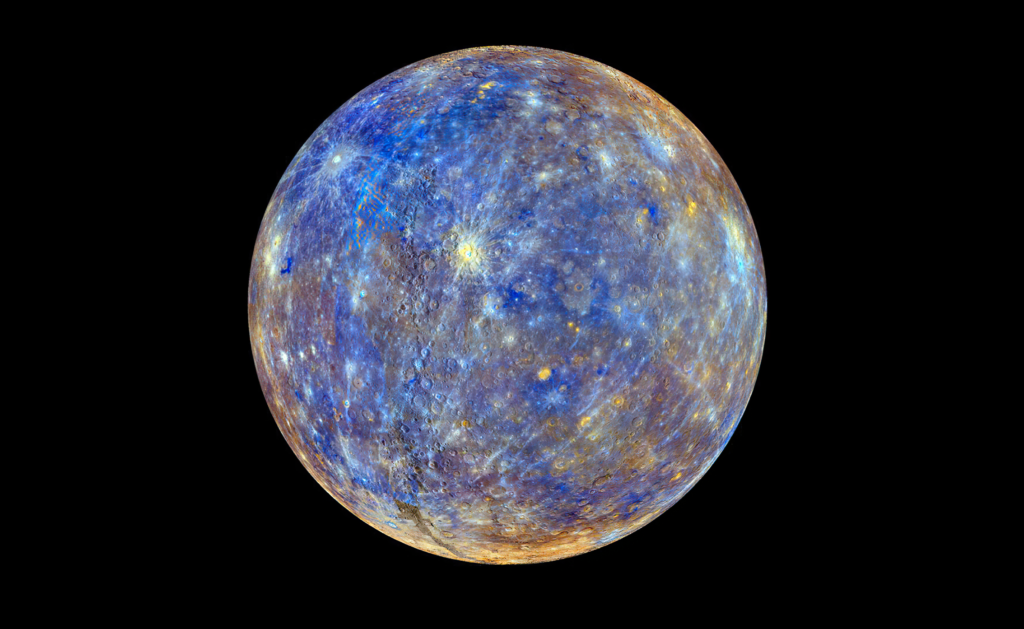
Did you know Neptune is about 30 times further from the Sun than Earth?
The average distances of the planets from the Sun are:
- Mercury: 57 million kilometres (35 million miles)
- Venus: 108 million kilometres (67 million miles)
- Earth: 150 million kilometres (93 million miles)
- Mars: 228 million kilometres (142 million miles)
- Jupiter: 779 million kilometres (484 million miles)
- Saturn: 1.43 billion kilometres (889 billion miles)
- Uranus: 2.88 billion kilometres (1.79 billion miles)
- Neptune: 4.50 billion kilometres (2.8 billion miles)
These distances are averages because the planets have elliptical orbits, so their distances from the Sun change depending on where they are in their orbits.
The planets in order of lightest to heaviest based on mass
Did you know Earth has more mass than Venus, Mars and Mercury?
The order of the planets in our Solar System from lightest to heaviest, based on mass is:
- Mercury: 3.30×10^23 kilograms (7.27×10^23 pounds)
- Mars: 6.41×10^23 kilograms (1.41×10^24 pounds)
- Venus: 4.86×10^24 kilograms (1.07×10^25 pounds)
- Earth: 5.97×10^24 kilograms (1.31×10^25 pounds)
- Uranus: 8.68×10^25 kilograms (1.91×10^26 pounds)
- Neptune: 1.02×10^26 kilograms (2.25×10^26 pounds)
- Saturn: 5.68×10^26 kilograms (1.25×10^27 pounds)
- Jupiter: 1.89×10^27 kilograms (4.17×10^27 pounds)
10^ followed by a number is a way of expressing very large numbers and is known as scientific notation. 10^27 means 10 raised to the power of 27, which is a 1 followed by 27 zeros. So, 10^27 equals 1,000,000,000,000,000,000,000,000,000.
The planets ordered by the length of day
Did you know Earth and Mars have almost equal lengths of day?
The planets in our solar system, ordered from shortest to longest length of day (a full rotation on its axis) are:
- Jupiter: 10 hours
- Saturn: 11 hours
- Neptune: 16 hours
- Uranus: 17 hours
- Earth: 24 hours
- Mars: 25 hours
- Mercury: 1,408 hours (58.67 Earth days)
- Venus: 5,832 hours (243 Earth days)
These lengths of day are averages and can vary depending on factors such as the planet’s axial tilt and the eccentricity of its orbit.
The planets in order of smallest to biggest
Did you know the biggest planet in our solar system is Jupiter?
The planets in our solar system, ordered from smallest to largest in terms of diameter, are:
- Mercury: Diameter of roughly 4,880 kilometres
- Mars: Diameter of about 6,779 kilometres
- Venus: Diameter of approximately 12,104 kilometres
- Earth: Diameter of 12,742 kilometres
- Neptune: Diameter of 49,244 kilometres
- Uranus: Diameter of about 50,724 kilometres
- Saturn: Diameter of 116,464 kilometres
- Jupiter: Diameter of about 139,822 kilometres
These diameters are averages because the planets are not perfect spheres.
The planets in order of least to most dense
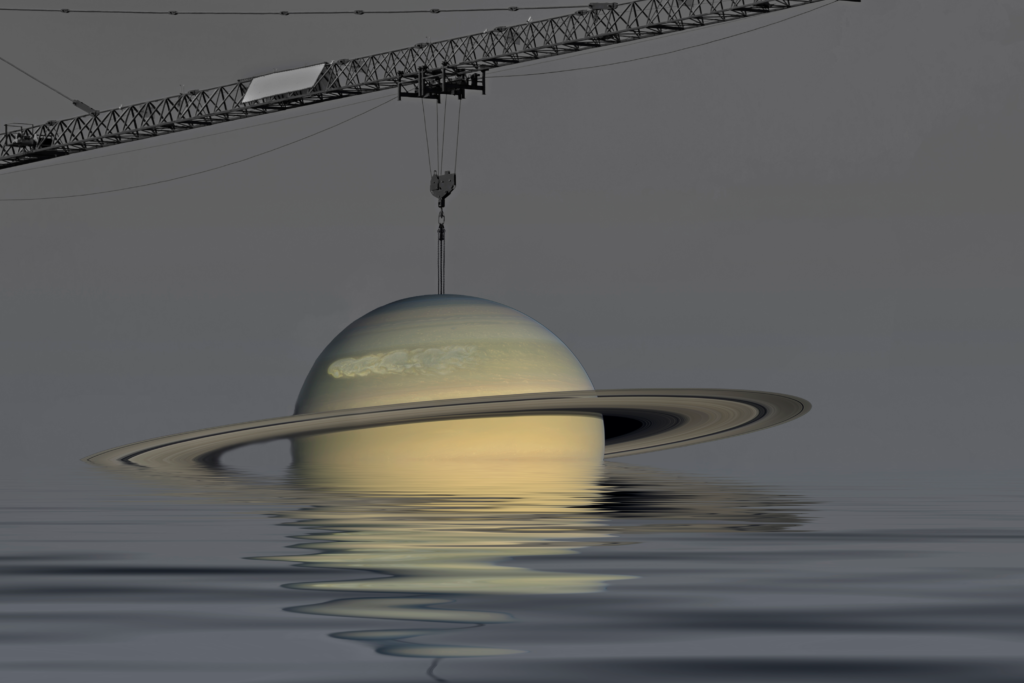
Did you know, while Saturn is one of the biggest planets in our solar system is it the least dense and can float on water (if there was a large enough sea to put it in)?
The planets in order of least to most dense are:
- Saturn: 0.687 g/cm³
- Uranus: 1.27 g/cm³
- Jupiter: 1.326 g/cm³
- Neptune: 1.638 g/cm³
- Mars: 3.934 g/cm³
- Venus: 5.243 g/cm³
- Mercury: 5.427 g/cm³
- Earth: 5.514 g/cm³
These densities are averages and are given in grams per cubic centimetre (g/cm³). The density of a planet can vary throughout its radius due to different layers such as the crust, mantle, and core.
The coldest to the hottest planet
Did you know Venus, while not the closest to the Sun is the hottest planet in our solar system?
The average temperatures of the planets ordered from coldest to hottest are:
- Neptune: -200°C (-330°F)
- Uranus: -195°C (-320°F)
- Saturn: -140°C (-220°F)
- Jupiter: -110°C (-166°F)
- Mars: -65°C (-85°F)
- Earth: 15°C (59°F)
- Mercury: 167°C (333°F)
- Venus: 464°C (867°F)
These temperatures are averages and can vary depending on factors such as the planet’s distance from the Sun and the composition of its atmosphere. Venus, despite not being the closest planet to the Sun, is the hottest due to its thick atmosphere causing a strong greenhouse effect.
Planets ranked from most to least amount of moons
Did you know, that Mars’ moon Phobos is so close to Mars’ surface, it can’t be seen in some places?
The order of planets in our solar system based on the number of recorded moons they have:
- Saturn has 146 moons
- Jupiter has 95 moons
- Uranus has 27 moons
- Neptune has 14 moons
- Mars has 2 moons
- Earth has 1 moon
Mercury and Venus do not have any moons.
Planets in order of most to least deadly (to human life)
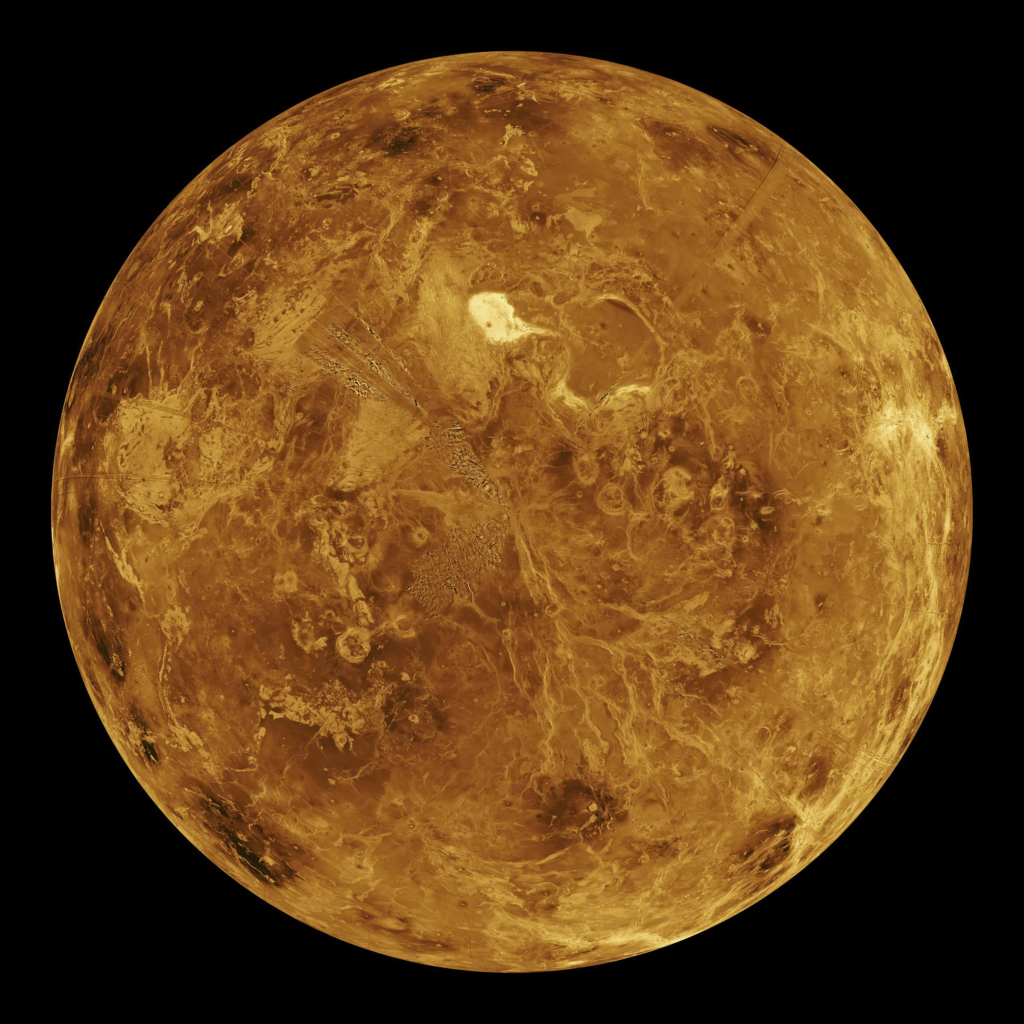
Did you know Venus is so hostile it can crush and melt a titanium spacecraft in under two hours?
The order of planets from the most instantly lethal to the safest for human life is:
- Venus: Suffocating carbon dioxide, clouds of sulfuric acid, and atmospheric pressure that would crush your bones instantly.
- Jupiter: Severe radiation belts that deliver lethal doses in minutes, combined with crushing atmospheric pressure and no solid surface to land on.
- Saturn: Extreme winds whipping at 1,800 kilometres per hour, lethal freezing temperatures, and zero solid ground.
- Neptune: Freezing supersonic winds that move faster than the speed of sound, combined with intense atmospheric pressure.
- Uranus: Freezing temperatures reaching down to -224°C, suffocating gases, and immense pressure.
- Mercury: Zero atmosphere to breathe, paired with extreme temperature swings that jump from a freezing -180°C at night to a scorching 430°C during the day.
- Mars: Lethal radiation, toxic soil, and a razor-thin carbon dioxide atmosphere, though it is the most survivable planet with an advanced spacesuit.
- Earth: Perfectly balanced atmosphere, liquid water, and a protective magnetic field that makes it the only inherently safe planet for human life.
The planets in order of shortest to longest year
Did you know a year on Mercury lasts just 88 Earth days, while a year on Neptune takes nearly 165 Earth years?
The order of the planets based on their orbital period from shortest to longest is:
- Mercury: 88 Earth days
- Venus: 225 Earth days
- Earth: 365.25 days (1 year)
- Mars: 687 Earth days (1.88 Earth years)
- Jupiter: 4,333 Earth days (11.86 Earth years)
- Saturn: 10,759 Earth days (29.45 Earth years)
- Uranus: 30,687 Earth days (84 Earth years)
- Neptune: 60,190 Earth days (164.8 Earth years)
Because the planets are traveling in giant circles around the Sun, the further away a planet is, the larger its track is and the longer its year takes to finish.
The planets ordered by surface gravity strength
Did you know that despite being a giant gas world, Saturn has a surface gravity almost identical to Earth’s?
The order of planets from the weakest surface gravity to the strongest surface gravity is:
- Mercury: 3.7 m/s²
- Mars: 3.7 m/s²
- Uranus: 8.69 m/s²
- Venus: 8.87 m/s²
- Earth: 9.81 m/s²
- Saturn: 10.44 m/s²
- Neptune: 11.15 m/s²
- Jupiter: 24.79 m/s²
Surface gravity depends on a planet’s total mass and its physical radius. This explains why giant gas worlds like Saturn and Uranus have shockingly low gravity forces at their cloud-tops; their mass is spread across a massive amount of physical space.
The planets in order of human discovery
Did you know Uranus was the very first planet ever discovered using a telescope, all the way back in 1781?
The historical order of when humanity first identified the planets is:
- Earth: Always known (Our home planet)
- Mercury: Known since ancient times
- Venus: Known since ancient times
- Mars: Known since ancient times
- Jupiter: Known since ancient times
- Saturn: Known since ancient times
- Uranus: Discovered in 1781 by William Herschel
- Neptune: Discovered in 1846 by Johann Gottfried Galle
The five planets besides Earth don’t have an official individual discoverer because they are bright enough to be seen easily in the night sky without any special equipment. It wasn’t until telescope technology advanced that Uranus and Neptune were found hidden in deep space.
Disclaimer:
Pluto has not been included because it was reclassified as a “dwarf planet” by the International Astronomical Union in 2006. Sorry Pluto.